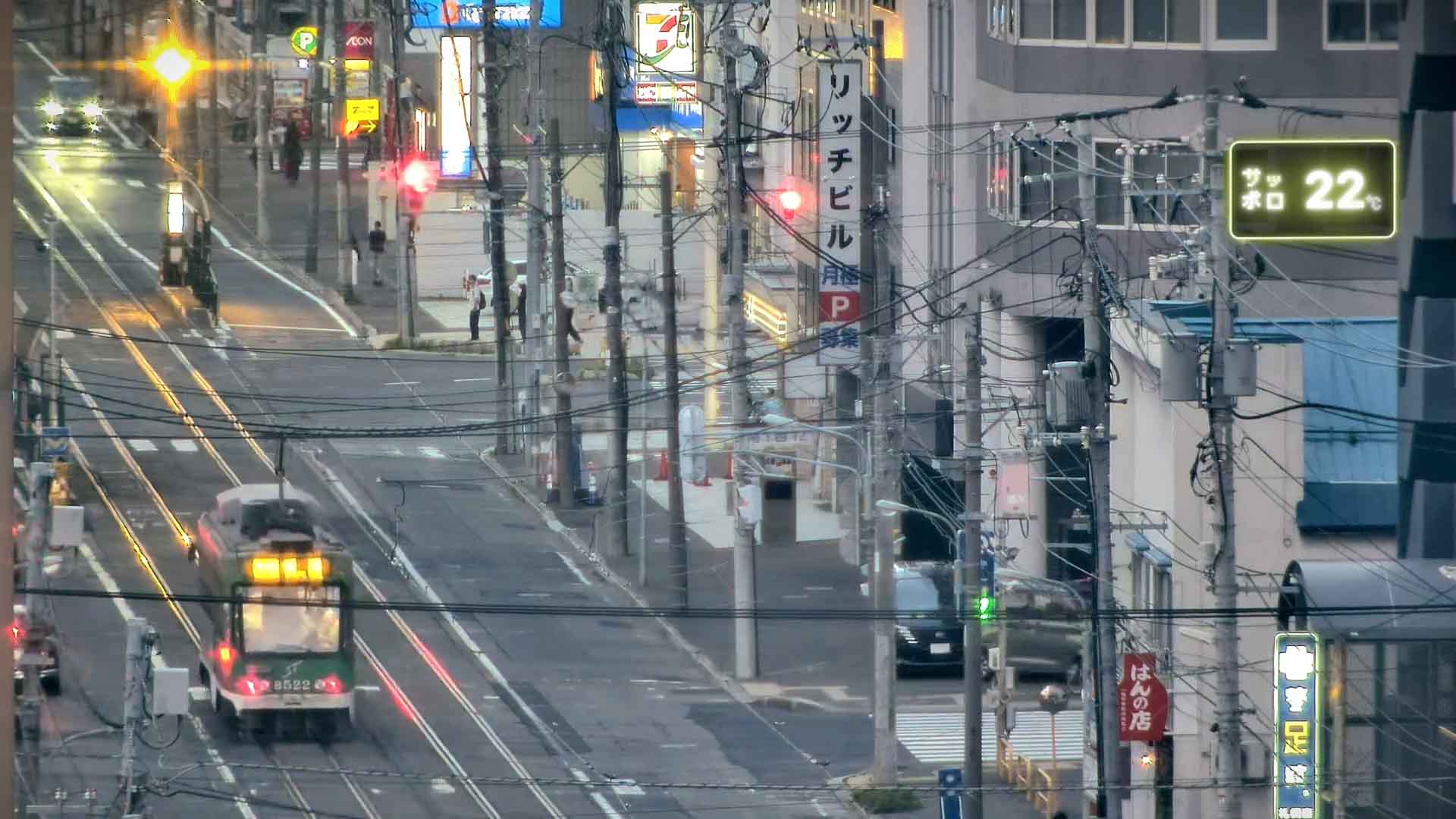

This live camera shows Mt. Moiwa, the mountain behind one of Japan's "New Three Major Night Views". It is handy for checking the conditions near the summit before heading up to the Mt. Moiwa Observation Deck. Check the timestamp in the lower right of the screen as well.
The Ainu people called Mt. Moiwa "Inkarush-pe", which means "the place where we always climb up to keep watch".
An old volcano, Mt. Moiwa is covered with a rich deciduous broadleaf forest. The northern slope you see on the camera is a virgin forest designated as a Natural Monument in 1921. A virgin forest has never been touched by planned logging or other human activity, so its nature remains intact.
Fresh green in early summer, autumn colors in fall and a coat of snow in winter — the mountain shows the changing seasons. In spring, when brown bears wake from hibernation, bear sightings are frequently reported around Mt. Moiwa. You could say this is proof that its rich flora and fauna have been preserved.
Mt. Moiwa is 531 m high. The Mt. Moiwa Observation Deck sits at the summit, and visitors can reach it easily on the Mt. Moiwa Ropeway.
The observation deck offers a panoramic view over Sapporo: JR Sapporo Station, Sapporo TV Tower, Susukino, Maruyama, the Toyohira River, Moerenuma Park, Sapporo Okadama Airport, Tsudome, Sapporo Dome, ES CON FIELD HOKKAIDO, Nopporo Forest Park, the Historical Museum of Hokkaido's Centennial Memorial Tower, the wind turbines of Ishikari Bay and Mt. Teine. On a clear day, you may even see Mt. Yubari and Mt. Ashibetsu to the east.
The night view is especially beautiful. The view from the Mt. Moiwa Observation Deck has been selected as one of Japan's New Three Major Night Views, together with Nagasaki and Kitakyushu. The trick is to arrive before sunset and enjoy the magic hour: the glittering city against a gradient sky makes for even more stunning photos.
Not only the view from the summit but also the mountain's ridgeline seen from the city is graceful — you can admire it from Nakajima Park or along the Toyohira River. Mt. Moiwa and Mt. Eniwa of Shikotsu-Toya National Park even appear in the background of a 1911 painting depicting the Crown Prince (later Emperor Taisho) crossing Toyohira Bridge during his visit to Sapporo.
The hill the Ainu called "Moiwa" (small mountain) is actually today's Maruyama. When the Hokkaido Development Commission laid out Sapporo's grid modeled on Kyoto, the summit of Moiwa — where Yoshitake Shima, the first chief commissioner, had sketched his vision of the city — was renamed "Maruyama" after Kyoto. Japanese settlers tried calling today's Mt. Moiwa "Engaruyama", after its Ainu name Inkarush-pe, but the name never caught on. In the end, the name "Moiwa" moved over to Inkarush-pe, which became Mt. Moiwa.